Food Enzymes for Processing: Dosage, pH, and Temperature Control
Troubleshoot food enzymes in processing with dosage bands, pH, temperature, QC checks, COA/TDS/SDS review, and pilot validation.
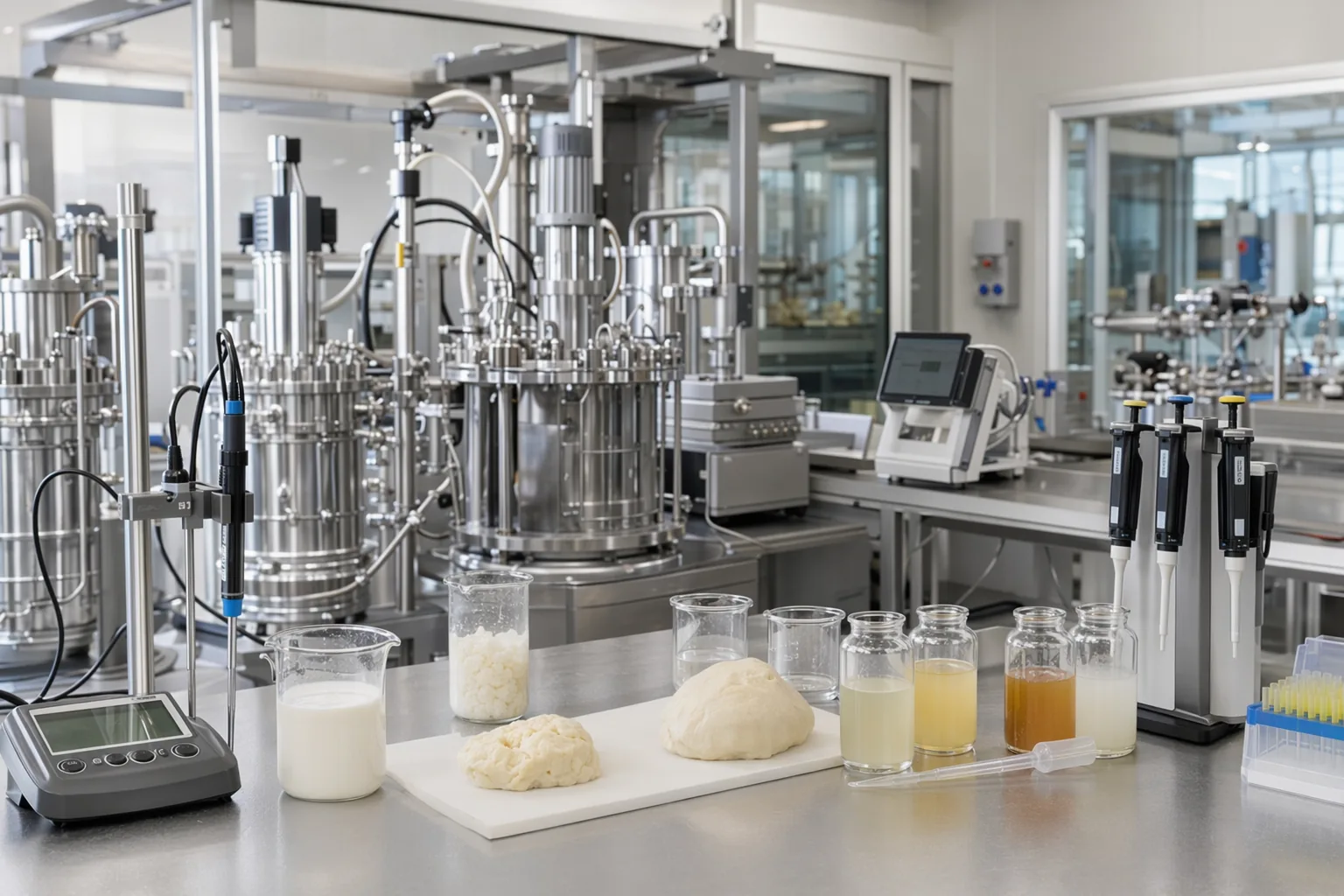
A practical guide for food manufacturers selecting and validating food processing enzyme kits for bakery, dairy, beverage, and ingredient operations.
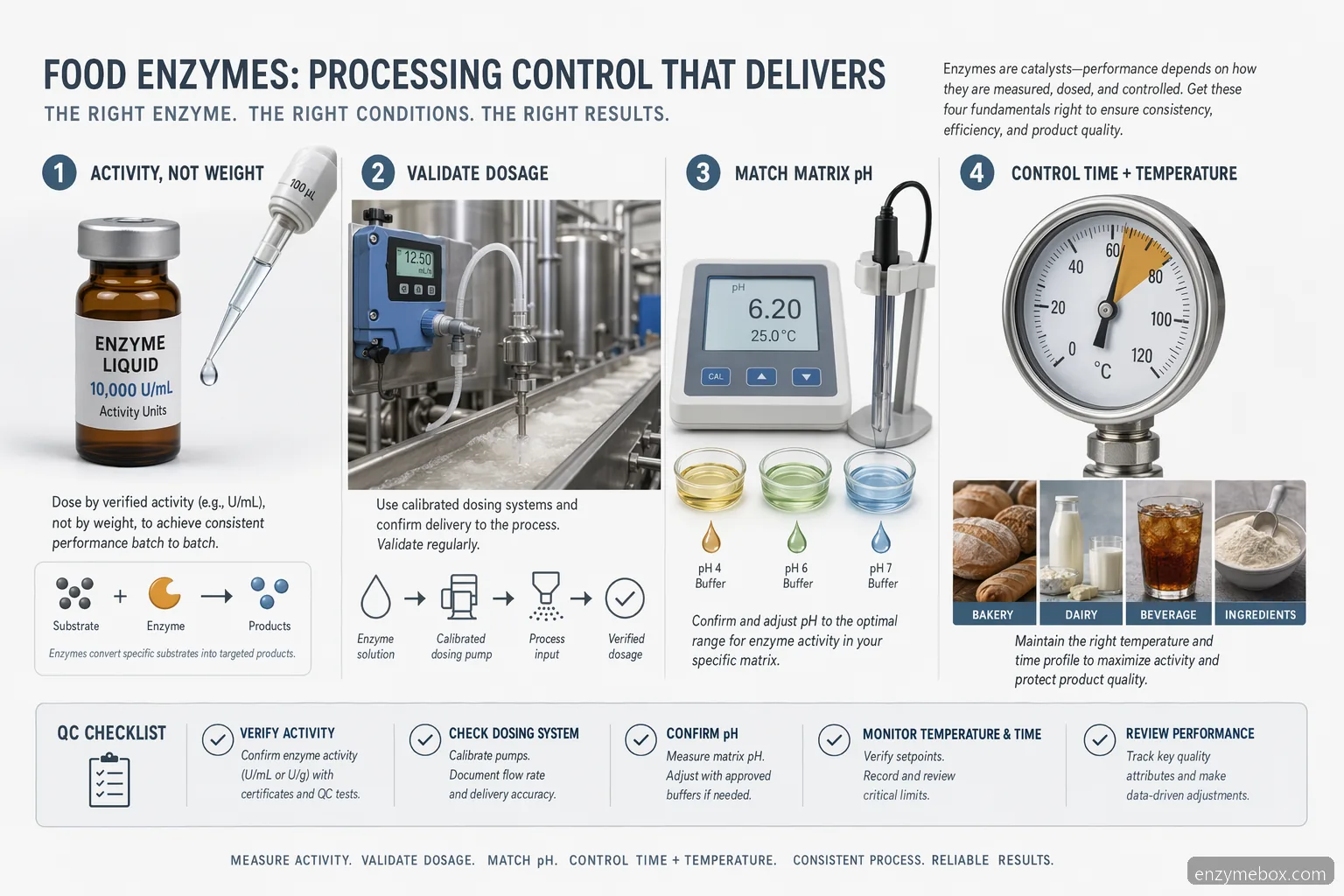
What Are Food Enzymes in Industrial Processing?
For B2B buyers asking “what are food enzymes,” they are biological catalysts used to modify starches, proteins, fats, fibers, lactose, pectins, and other food components under controlled processing conditions. In food processing, the goal is not medical nutrition or food enzymes supplements; it is repeatable functionality such as viscosity reduction, dough handling, flavor development, filtration improvement, lactose hydrolysis, or yield optimization. The phrase “breaking down food using enzymes that alter the molecules composition.” describes the core mechanism, although industrial teams should frame it as targeted hydrolysis or biochemical conversion of specific substrates. Enzymes in food manufacturing must be chosen according to the substrate, process step, pH, temperature, time, and downstream kill step. A supplier should help match activity units to your matrix instead of recommending a generic dose.
Common classes include amylase, protease, lipase, lactase, cellulase, xylanase, and pectinase. • Typical applications include bakery, dairy, brewing, fruit processing, plant protein, and starch conversion. • Industrial enzyme use should be documented through batch records and QC data.
Dosage Troubleshooting: Start with Activity, Not Weight
Dosage for food enzymes is usually expressed by activity units, ppm, percentage on flour or substrate, or grams per metric ton of raw material. A practical screening band may start around 10–100 ppm for high-activity preparations, 0.01–0.10% for many bakery or dairy applications, or supplier-defined units per kilogram of substrate. These are not universal limits; they are pilot trial starting points. Under-dosing often causes incomplete conversion, high viscosity, poor filtration, low sweetness, or inconsistent texture. Over-dosing may create excessive softening, bitterness, weak dough, protein breakdown, or specification drift. Troubleshooting should compare enzyme lot activity, substrate variability, hydration, mixing intensity, residence time, and whether preservatives, salts, polyphenols, or heat exposure are suppressing activity. The correct commercial decision is based on cost-in-use and final quality, not the lowest enzyme addition rate.
Run at least three dosage points around the supplier’s recommended use level. • Track conversion, yield, viscosity, sensory impact, and downstream processing speed. • Confirm that dosing equipment can accurately meter low-volume liquid or powder additions.
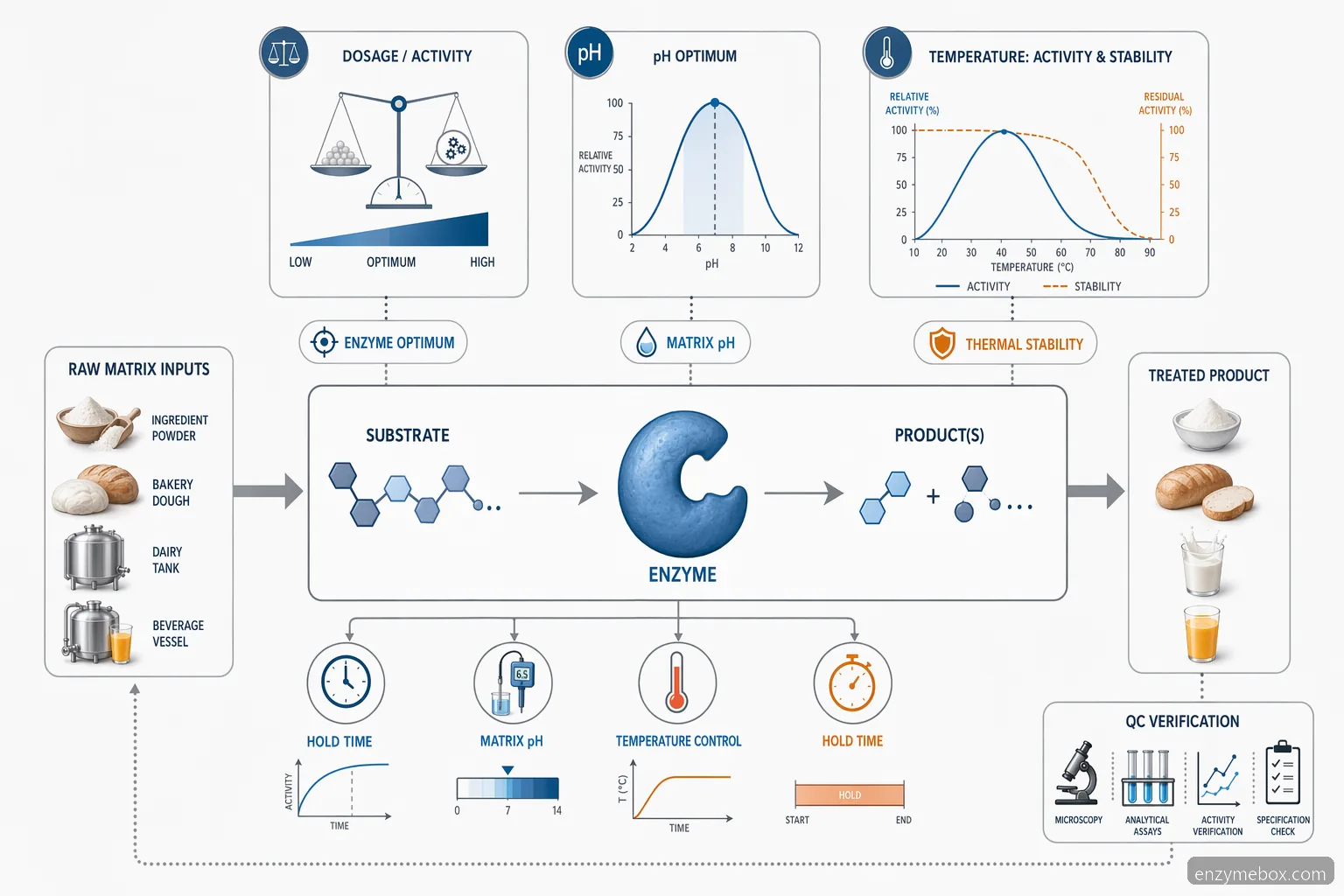
pH Control: Match Enzyme Optimum to the Real Matrix
Most food processing enzyme failures are not caused by a bad enzyme; they are caused by operating outside the active pH window. Many amylases perform best near pH 5.0–7.0, lactase often works around pH 4.5–7.0 depending on source and dairy matrix, proteases may be acidic, neutral, or alkaline, and pectinases commonly operate near pH 3.0–5.0. Your formulation may shift during heating, fermentation, fruit concentration, or mineral addition, so measure pH at the enzyme reaction temperature rather than relying only on raw material pH. Buffer capacity also matters: a small acid or base addition may not move a dairy or protein system as expected. For troubleshooting, collect pH data at enzyme addition, mid-hold, and before inactivation. If results drift between lots, compare raw material ash, protein, fruit maturity, or syrup composition.
Measure pH in the actual process matrix, not only in water. • Avoid large pH corrections after enzyme addition unless validated. • Document acceptable pH operating ranges in the batch record.
Temperature and Time: Balance Activity with Stability
Temperature determines both reaction speed and enzyme stability. Many food enzymes show useful activity between 30°C and 65°C, while some thermostable amylases can operate at higher temperatures during starch liquefaction. Dairy lactase may be used under refrigerated or warm conditions depending on process design, but reaction time will change significantly. Bakery enzymes must survive mixing and proofing long enough to act, then be inactivated during baking. Fruit and beverage enzymes are often held near moderate temperatures to improve maceration or clarification before pasteurization. When troubleshooting, verify the actual product temperature at the enzyme contact point, not only the jacket setpoint. Cold spots, rapid heat ramps, steam injection, or long transfer lines may reduce effective activity. Define both minimum reaction time and maximum hold time to prevent under-conversion or over-processing.
Record temperature continuously during pilot and first commercial batches. • Validate enzyme inactivation when residual activity could affect shelf life. • Check that heat treatment does not occur before the enzyme has sufficient contact time.
Supplier Qualification and Documentation
A qualified food grade enzyme supplier should provide technical and regulatory documentation before plant trials. Request a COA for each lot, a TDS with activity definition and recommended conditions, an SDS for safe handling, allergen and GMO status statements where relevant, origin information, storage guidance, and shelf-life data. If your team references external resources such as a food enzyme institute or trade guidance, use them for education, but qualify the actual supplier through your internal approval process. Confirm lot traceability, change notification practices, packaging suitability, and whether the enzyme is liquid, granulated, immobilized, or blended into a kit. Enzymebox.com food processing enzyme kits should be evaluated through pilot validation under your real pH, temperature, dosage, and sanitation conditions. Final approval should include QC acceptance criteria and a cost-in-use model.
Review COA, TDS, SDS, allergen, storage, and shelf-life documentation. • Ask for activity method details and acceptable lot-to-lot variation. • Include procurement, QA, R&D, production, and EHS in supplier approval.
QC Checks for Bakery, Dairy, and Food Processing Lines
QC should connect enzyme performance to measurable product and process outcomes. In bakery, monitor dough rheology, proof tolerance, loaf volume, crumb softness, stickiness, and bake loss. In dairy, track lactose conversion, viscosity, pH drift, flavor, protein stability, and microbial controls. In fruit, beverage, and plant processing, measure viscosity, turbidity, filterability, soluble solids, extraction yield, and sediment formation. Do not rely on sensory results alone; combine them with analytical and line-performance data. Some internet searches mix industrial topics with “digestive enzymes in food,” “food enzymes and weight loss,” or the phrase “provides temporary storage of food enzymes and waste products.” Those topics are not purchasing criteria for an industrial enzyme program. For manufacturing, the relevant question is whether the food processing enzyme repeatedly delivers specification compliance, efficient throughput, and safe handling in your validated process.
Set pre-trial acceptance criteria before testing. • Compare control, low dose, target dose, and high dose samples. • Retain pilot samples for shelf-life and stability review.
Technical Buying Checklist
Buyer Questions
Start with the substrate and problem statement: starch thinning, lactose hydrolysis, dough conditioning, protein modification, clarification, or yield improvement. Then match enzyme class, pH range, temperature profile, reaction time, and downstream inactivation needs. Ask the supplier for a TDS, COA, SDS, recommended dosage range, and pilot protocol. Final selection should be based on validated product quality and cost-in-use.
Use the supplier’s recommended activity-based range, then test at least three points such as low, target, and high dose. For many concentrated food processing enzymes, screening may begin around 10–100 ppm or 0.01–0.10%, but the correct range depends on activity units, substrate level, matrix inhibitors, mixing, and residence time. Always compare against an untreated control and defined QC targets.
Common causes include pH drift, lower actual product temperature, short contact time, poor mixing, inaccurate dosing, substrate variability, preservatives, salts, or premature heat exposure. Lab beakers often provide better dispersion and tighter control than plant tanks or continuous lines. Repeat the trial using production water, real raw materials, representative shear, commercial heating rates, and the intended enzyme addition point.
Before approval, request a certificate of analysis for the specific lot, technical data sheet, safety data sheet, allergen information, storage and shelf-life guidance, activity method, recommended use conditions, and traceability details. Depending on your market and product, you may also need statements on source materials or genetic modification status. Avoid approving a supplier based only on a quotation or informal dosage suggestion.
No. This page addresses enzyme for food industry applications such as bakery, dairy, beverage, starch, and ingredient processing. Food enzymes supplements are consumer products and should not be used as a basis for industrial purchasing, dosing, or safety review. Industrial enzymes require process validation, food-grade documentation, safe handling procedures, and measurable QC outcomes in the finished product and manufacturing line.
Related Search Themes
breaking down food using enzymes that alter the molecules composition., food enzyme institute, what are food enzymes, provides temporary storage of food enzymes and waste products, food enzymes supplements, enzymes in food
Enzyme Evaluation Kits for Research & Industry
Need Enzyme Evaluation Kits for your lab or production process?
ISO 9001 certified · Food-grade & research-grade · Ships to 80+ countries
Frequently Asked Questions
How do I choose the right food enzymes for a processing line?
Start with the substrate and problem statement: starch thinning, lactose hydrolysis, dough conditioning, protein modification, clarification, or yield improvement. Then match enzyme class, pH range, temperature profile, reaction time, and downstream inactivation needs. Ask the supplier for a TDS, COA, SDS, recommended dosage range, and pilot protocol. Final selection should be based on validated product quality and cost-in-use.
What dosage should we use for a first pilot trial?
Use the supplier’s recommended activity-based range, then test at least three points such as low, target, and high dose. For many concentrated food processing enzymes, screening may begin around 10–100 ppm or 0.01–0.10%, but the correct range depends on activity units, substrate level, matrix inhibitors, mixing, and residence time. Always compare against an untreated control and defined QC targets.
Why did the enzyme work in the lab but fail in production?
Common causes include pH drift, lower actual product temperature, short contact time, poor mixing, inaccurate dosing, substrate variability, preservatives, salts, or premature heat exposure. Lab beakers often provide better dispersion and tighter control than plant tanks or continuous lines. Repeat the trial using production water, real raw materials, representative shear, commercial heating rates, and the intended enzyme addition point.
What documents should a food grade enzyme supplier provide?
Before approval, request a certificate of analysis for the specific lot, technical data sheet, safety data sheet, allergen information, storage and shelf-life guidance, activity method, recommended use conditions, and traceability details. Depending on your market and product, you may also need statements on source materials or genetic modification status. Avoid approving a supplier based only on a quotation or informal dosage suggestion.
Are food enzymes the same as digestive enzyme supplements?
No. This page addresses enzyme for food industry applications such as bakery, dairy, beverage, starch, and ingredient processing. Food enzymes supplements are consumer products and should not be used as a basis for industrial purchasing, dosing, or safety review. Industrial enzymes require process validation, food-grade documentation, safe handling procedures, and measurable QC outcomes in the finished product and manufacturing line.
Related: Industrial Food Enzyme Evaluation Kits
Turn This Guide Into a Supplier Brief Request a food processing enzyme kit consultation with COA, TDS, SDS review, pilot dosage guidance, and cost-in-use support. See our application page for Industrial Food Enzyme Evaluation Kits at /applications/industrial-food-enzyme-evaluation-kits/ for specs, MOQ, and a free 50 g sample.
Contact Us to Contribute