Nature's Sunshine Food Enzymes: Industrial Food Processing Enzyme Kit Checklist
Compare consumer food enzymes with food processing enzyme kits: specs, pH, dosage, QC, COA/TDS/SDS, validation, and supplier qualification.
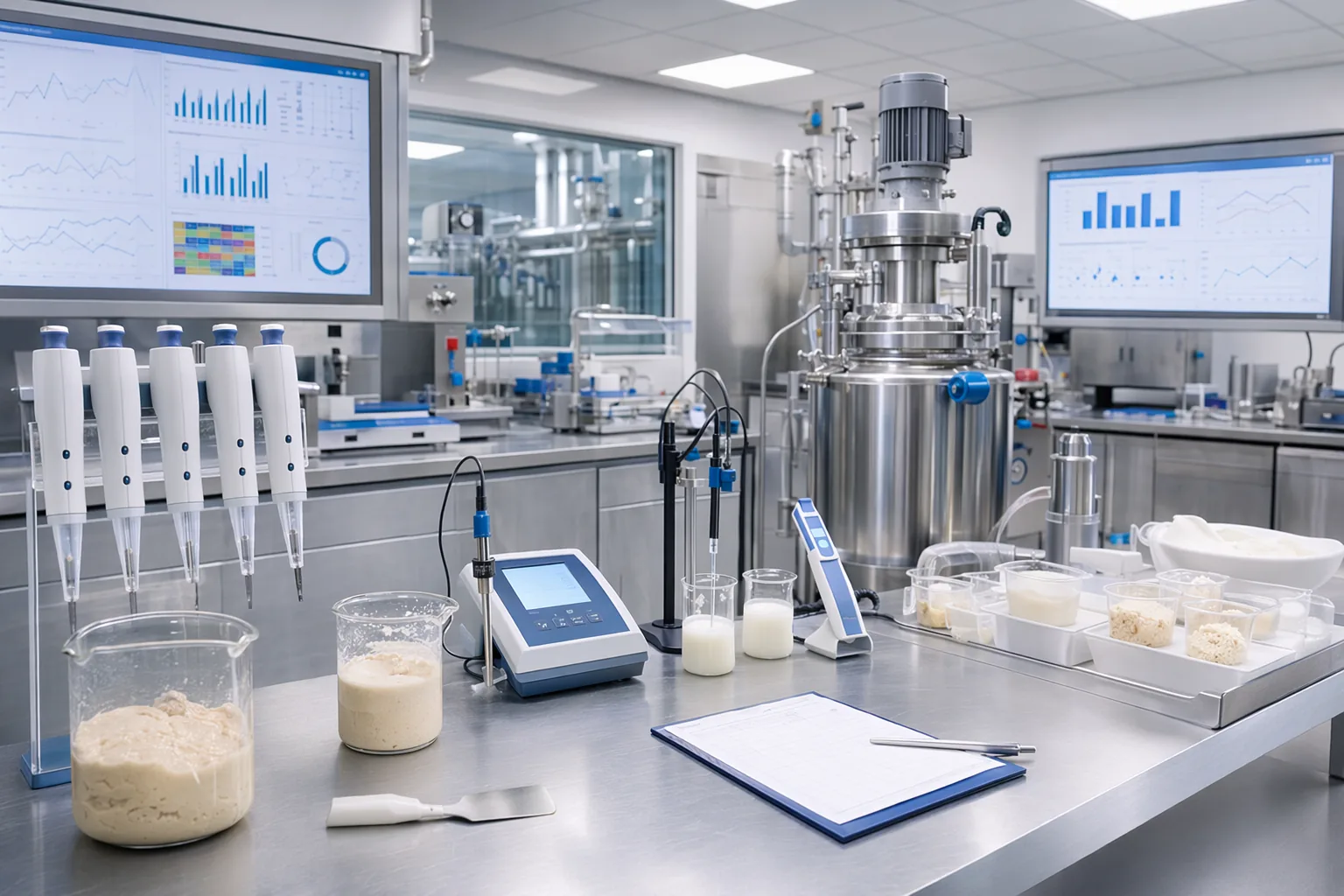
For procurement teams comparing consumer enzyme searches with B2B production needs, this guide explains how to specify food processing enzyme kits for bakery, dairy, and general food manufacturing.
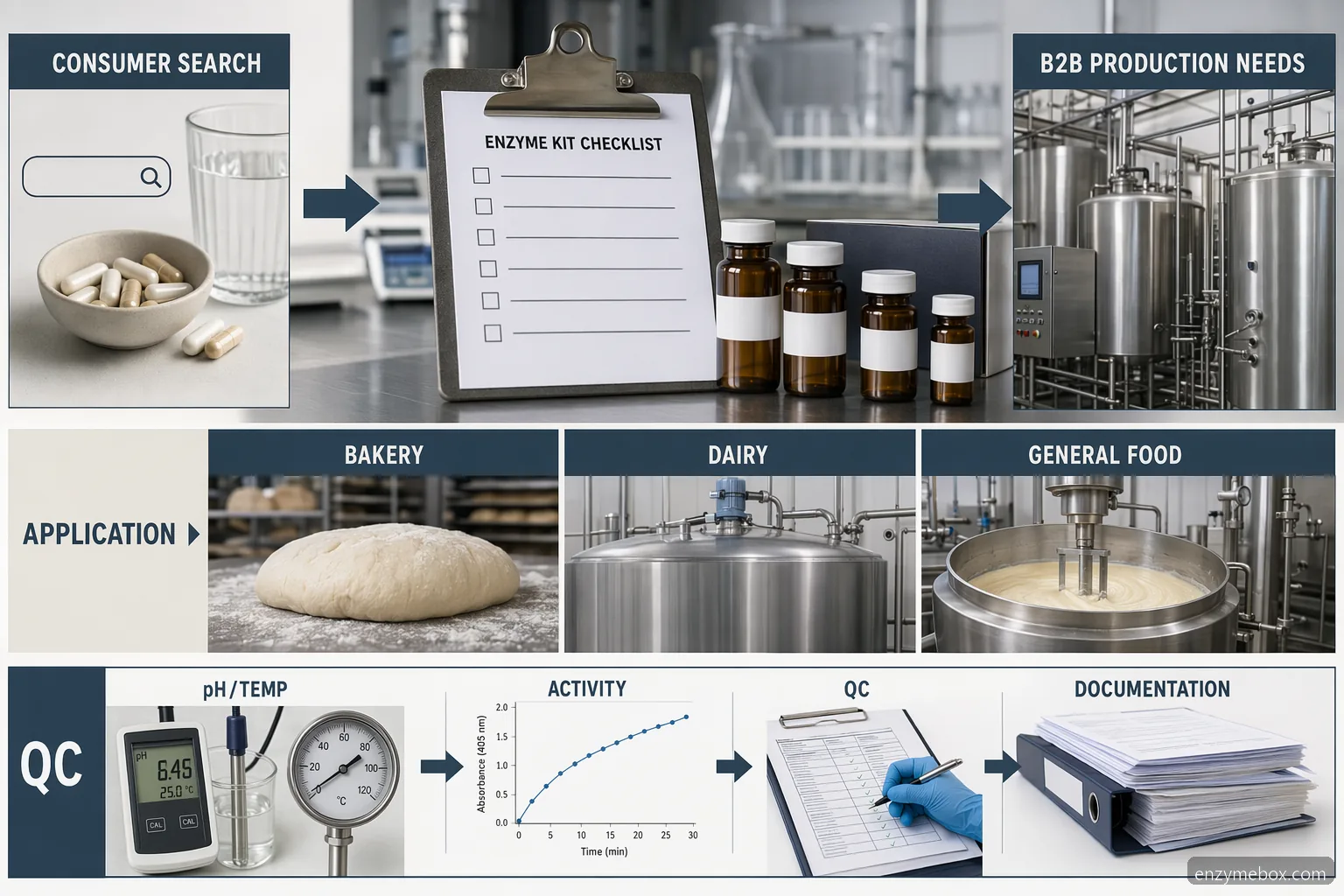
Why this comparison matters for food manufacturers
Searches for nature's sunshine food enzymes often come from the consumer supplement market, but industrial food processing requires a very different decision framework. A bakery, dairy plant, or prepared-food manufacturer is not buying food enzymes for digestion support; it is buying controlled biocatalysts that perform defined reactions in a validated process. In production, breaking down food using enzymes that alter the molecules composition may mean hydrolyzing starch, modifying proteins, reducing viscosity, improving dough handling, or developing flavor precursors. The enzyme must be food grade, traceable, supported by technical documentation, and compatible with the real processing matrix. Procurement should compare enzyme kits by measurable activity, recommended use rate, processing window, and deactivation step rather than retail label language. This distinction protects product consistency, plant compliance, and cost control.
Separate supplement terminology from industrial food enzyme specifications. • Define the target reaction before requesting samples. • Use pilot batches before commercial roll-out.
Core specification checklist for food processing enzyme kits
A practical food processing enzyme specification starts with the substrate, unit activity, and process window. For bakery amylases, typical operating ranges may be pH 4.5-6.5 and 30-65°C, depending on the enzyme source and desired dough or crumb effect. Proteases used in bakery or protein modification may operate around pH 5.0-8.0 and 35-60°C. Dairy lactase systems are commonly evaluated near pH 6.0-7.0 for milk applications or lower pH ranges for fermented matrices, with temperatures selected to fit holding time and microbial control. Dosage bands are usually screened in trials, often from 0.005-0.2% w/w or a supplier-stated activity dose per kg of raw material. Buyers should require dosage-to-result curves, not only a recommended label dose.
Confirm enzyme activity units and test method. • Match pH and temperature to the actual process. • Check carrier, solubility, and dispersion method. • Define thermal or pH inactivation conditions.
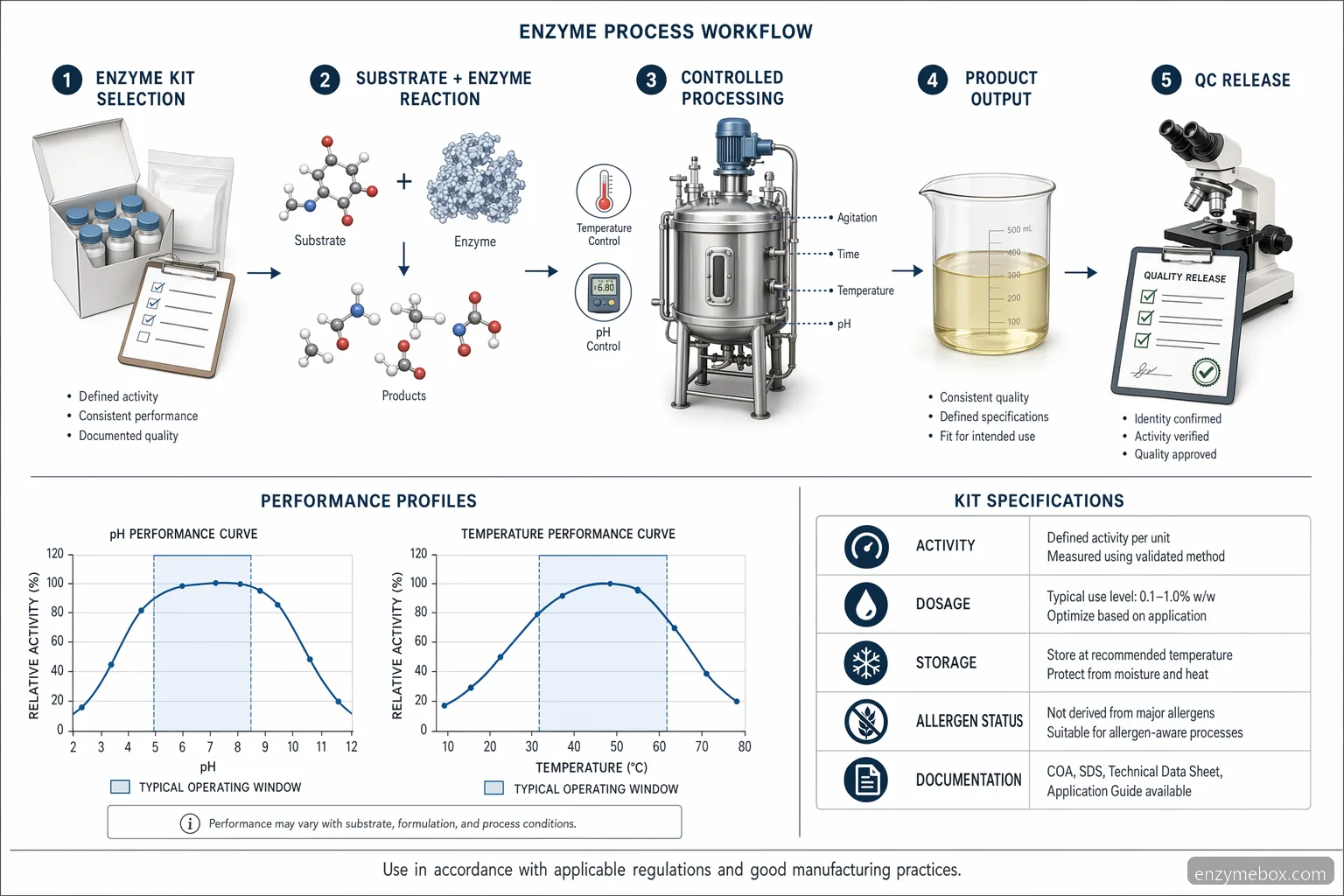
Pilot validation, QC checks, and production controls
Before approval, an enzyme for food industry use should pass bench screening, pilot validation, and controlled plant trials. QC should measure the intended process effect: reducing sugar release for amylase, degree of hydrolysis for protease, lactose reduction for lactase, viscosity change for carbohydrase, or texture and bake volume for bakery systems. Plants should also monitor pH, temperature, contact time, mixing uniformity, water activity, microbial load where relevant, and finished-product sensory attributes. A qualified food grade enzyme supplier should help translate lab data into processing limits and corrective actions. If a process provides temporary storage of food enzymes and waste products, holding tanks and waste streams must also be evaluated for sanitation, residual activity, and cleaning validation. Enzyme carryover should be controlled when downstream reactions are undesirable.
Run negative controls and multiple dosage levels. • Track lot-to-lot activity variation. • Validate hold time and inactivation step. • Document finished-product impact.
Documentation and supplier qualification
Industrial buyers should request a complete technical package before purchase approval. At minimum, compare the Certificate of Analysis, Technical Data Sheet, Safety Data Sheet, allergen statement, composition or carrier disclosure as permitted, storage and shelf-life data, and country-of-origin or traceability information. COA results should reference activity units, appearance, microbial limits where applicable, and lot number. The TDS should define application range, dosage guidance, handling, and compatibility notes. The SDS should support safe receiving, storage, PPE selection, and spill response. Supplier qualification should include responsiveness, change-control communication, sample availability, technical support, and the ability to provide consistent lots at production scale. Avoid relying on broad claims from a food enzyme institute, forum, or consumer education source without matching them to plant-level validation.
Request COA, TDS, SDS, and traceability documents. • Confirm change notification practices. • Evaluate technical service quality. • Qualify backup supply where risk is high.
Cost-in-use for bakery, dairy, and food processing
The lowest price per kilogram is rarely the lowest cost-in-use. A concentrated food enzyme may cost more per package but require a lower activity dose, reduce processing time, improve yield, or cut rework. In bakery, cost-in-use may include dough tolerance, crumb softness, volume, waste reduction, and compatibility with flour variability. In dairy, it may include lactose conversion rate, holding time, flavor impact, and clean-in-place considerations. In broader food processing, enzymes in food systems can affect viscosity, filtration speed, extraction yield, clarification, or texture. Procurement should model enzyme cost per metric ton of finished product, then compare it with measurable production gains. Topics such as food enzymes and weight loss or food enzymes supplements are outside this B2B evaluation and should not drive industrial purchasing decisions.
Calculate cost per finished ton, not cost per drum. • Include yield, labor, energy, and rework impacts. • Compare activity-normalized quotes. • Use plant data for final supplier selection.
Technical Buying Checklist
Buyer Questions
Food enzymes are processing aids or functional biocatalysts used to modify food materials under controlled conditions. In manufacturing, they may hydrolyze starch, protein, lactose, fiber, or pectin to improve yield, texture, filtration, flavor development, or process efficiency. They are specified by activity, pH range, temperature range, dosage, matrix compatibility, and documentation, not by consumer supplement positioning.
Consumer food enzymes supplements should not be assumed suitable for industrial production. Food manufacturers need food grade enzyme products with defined activity units, COA, TDS, SDS, traceability, storage guidance, and process support. Supplements are designed for retail consumption contexts, while food processing enzyme kits are selected for validated reactions, repeatable plant performance, and regulatory documentation appropriate to manufacturing.
Compare suppliers using activity-normalized pricing, technical documentation, sample support, pilot results, lot consistency, lead time, change-control practices, and application expertise. Ask each supplier to recommend dosage bands, pH and temperature limits, inactivation conditions, and QC methods. Final selection should be based on validated cost-in-use and finished-product performance, not only on quoted price per kilogram.
For B2B food processing, enzymes in food are evaluated for manufacturing outcomes such as hydrolysis, texture, viscosity, yield, flavor development, or lactose conversion. Food enzymes and weight loss claims are outside industrial procurement scope and should not be used to select a processing enzyme. Buyers should rely on technical specifications, pilot validation, QC data, and supplier qualification for production decisions.
Related Search Themes
breaking down food using enzymes that alter the molecules composition., food enzymes, food enzyme institute, what are food enzymes, provides temporary storage of food enzymes and waste products, food enzymes supplements
Enzyme Evaluation Kits for Research & Industry
Need Enzyme Evaluation Kits for your lab or production process?
ISO 9001 certified · Food-grade & research-grade · Ships to 80+ countries
Frequently Asked Questions
What are food enzymes in industrial manufacturing?
Food enzymes are processing aids or functional biocatalysts used to modify food materials under controlled conditions. In manufacturing, they may hydrolyze starch, protein, lactose, fiber, or pectin to improve yield, texture, filtration, flavor development, or process efficiency. They are specified by activity, pH range, temperature range, dosage, matrix compatibility, and documentation, not by consumer supplement positioning.
Can consumer food enzymes supplements be used in food processing?
Consumer food enzymes supplements should not be assumed suitable for industrial production. Food manufacturers need food grade enzyme products with defined activity units, COA, TDS, SDS, traceability, storage guidance, and process support. Supplements are designed for retail consumption contexts, while food processing enzyme kits are selected for validated reactions, repeatable plant performance, and regulatory documentation appropriate to manufacturing.
How should we compare two food processing enzyme suppliers?
Compare suppliers using activity-normalized pricing, technical documentation, sample support, pilot results, lot consistency, lead time, change-control practices, and application expertise. Ask each supplier to recommend dosage bands, pH and temperature limits, inactivation conditions, and QC methods. Final selection should be based on validated cost-in-use and finished-product performance, not only on quoted price per kilogram.
Are enzymes in food relevant to weight loss claims?
For B2B food processing, enzymes in food are evaluated for manufacturing outcomes such as hydrolysis, texture, viscosity, yield, flavor development, or lactose conversion. Food enzymes and weight loss claims are outside industrial procurement scope and should not be used to select a processing enzyme. Buyers should rely on technical specifications, pilot validation, QC data, and supplier qualification for production decisions.
Related: Industrial Food Enzyme Evaluation Kits
Turn This Guide Into a Supplier Brief Request a food processing enzyme kit comparison, sample plan, and cost-in-use review from EnzymeBox. See our application page for Industrial Food Enzyme Evaluation Kits at /applications/industrial-food-enzyme-evaluation-kits/ for specs, MOQ, and a free 50 g sample.
Contact Us to Contribute